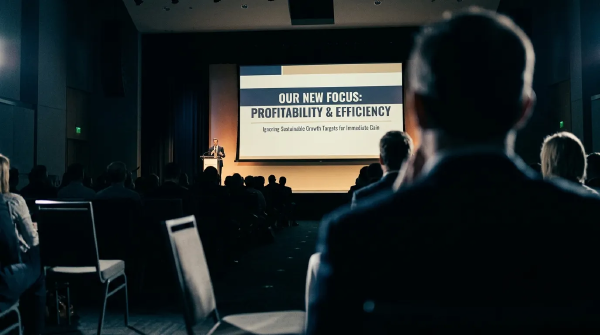
I’d been at the company for 2 days when the CEO called the product team into a room.
Three weeks earlier, they’d launched a refreshed website. The old one was looking a little tired, so it got a new coat of paint. Then the bounce rates on the main customer journeys went through the roof, and the cart abandonment rate followed them up.
The CEO was furious, and she wanted an answer. So she ran a 5 Whys session herself.
The problem was high abandonment. After a very sprightly 48 minutes, we had our root cause: the product was too expensive. The fix was obvious. Reduce the price.
They cut the price straight after the session, and agreed to come back in a month and look at the numbers again.
Where is the price?#
Once we were out of the room, I went to find the CEO. She was pumped. I asked whether it was OK to look at other options while we waited for the evidence to flood in from the price reduction.
I sold it as insurance. What happens if this doesn’t work when we come back to it in a month? She was very aware of the new competition, and she didn’t want to be a month further on without an answer that mattered. I pointed at the risk of that position, and by the end of the conversation it was her idea.
Talking to customers wasn’t something this company did, so we started small. We added a popup on exit to a couple of customer journeys: ‘Before you go… can we talk to you?’ Customers could talk to someone from the product team there and then, or book an online conversation for a time that suited them.
We had it running straight away, and within about a week, by the third of those on-the-spot conversations, we thought we knew what the problem was.
As a rule, if I hear the same problem 3 times in a row from different people, that’s enough for me to run an experiment. The CEO wanted more rigour than that. She’d spent a fortune on the redesign, and changing it on a whim wasn’t something she wanted to experiment with.
So we followed up with proper interviews, testing the options we’d heard and weighing the themes. None of this was normal practice there, and the popup and interviews took about 3 weeks. Customers gave us plenty of other ideas along the way. 8 out of 10 users asked the same question. Where is the price?
The redesign had removed all pricing from the site. Customers had to go through the whole purchase journey before they found out how much the product cost, and that was the point where they dropped out. 3 of them demonstrated it in the interview, clicking all the way through the flow just to find a number.
Credit to them for sticking with it. There were several companies in that sector with comparable products, and I’m not sure I would have.
Our work had been the backup while the CEO waited to see whether the price cut worked. The price cut did nothing. 5 weeks after the session, she asked for the pricing to be fixed, and it was fixed that day. She’d moved just as fast on the price cut.
The bounce rate dropped as soon as the fix went live. Within a week it was below where the old site had been, and the abandonment rate was down 70% on where the new site had started.
So the session was right that price was the problem, and wrong about which part of it. A cheaper price nobody can see is still a price nobody can see.
Every why was a choice#
I’ve never been particularly fond of the 5 Whys. Asking why is generally an excellent idea, and I’d encourage more of it, particularly in organisations where asking why something exists is treated as an act of insubordination.
What bothers me is the assumption underneath the technique: if you keep asking why, you’ll eventually arrive at the root cause. One problem, one chain, one answer. How wonderfully convenient.
Each of those whys had more than one possible answer. Customers might have been leaving because the product was too expensive. They might have been leaving because they couldn’t find out what it cost. They might have been leaving because the new journeys confused them, or because a competitor was a click away.
Someone in the room picked one answer at each step, and the chain carried on from there. With the CEO running the session, a lot of those choices had her weight behind them.
By the end, five judgement calls looked like a deduction. Somebody wrote the answer on a sticky note, and everyone nodded.
Changing the redesign needed weeks of interviews. Cutting the price needed 48 minutes, because the chain made it look like the answer had already been found.
A single causal chain can be a useful hypothesis. The trouble starts when the format hands you a root cause, because a root cause sounds finished. The follow-up meeting that gets booked is the one to check whether the fix worked, a month later, with the price already cut.
Linear cause and effect is one of the biggest problems I’ve seen in product thinking. ‘If I do this, then this happens’ is a prediction. ‘If we see this, then we know we’re right’ is a test. They’re poles apart, and a 5 Whys session hands you the first kind.
‘You’re doing it wrong’#
Defenders of the 5 Whys will tell you that isn’t how it’s supposed to work. You go and look at the problem where it happens. You gather evidence at each step. You follow more than one branch.
Fair enough. If a machine stops because a component fails, tracing the chain of causes with the evidence in front of you might be exactly what you need.
In 20 years of product work, the version I’ve seen most often happens in a meeting room, under pressure, with whoever is most senior holding the pen. Ours had no customer evidence in it at all, because nobody had spoken to a customer. The first conversation that would have changed the answer was one exit popup away.
And products aren’t machines. Pricing, the redesign, competitors one click away, and customers’ patience were all tangled up together. Where exactly is the root cause in that lot?
The same mistake, looking forward#
I wrote recently about the North Star Metric, and I think it’s the same habit pointed the other way.
The 5 Whys starts with an outcome and works backwards, hunting for the single cause that explains it. The North Star Metric starts with our actions and looks forward, hunting for the single number that defines success.
Both take a web of relationships and flatten it into a line. And both hide the judgement calls that went into drawing it.
What I’d do instead#
Treat the chain as one hypothesis. Before anyone changes anything, write down the other answers you could have given at each why, because those are the choices the session made for you. For each one, decide what you’d expect to see if it were right.
Then go and look. Talk to a customer, ideally one who’s about to leave. In our case, 3 conversations with people abandoning the journey told us more than 48 minutes in a room.
And if you’re not the one holding the pen, you don’t need to win the argument in the room. Sell the investigation as insurance against the fix not working, and let it become someone else’s idea.
The last time your team found a root cause, how many other answers did you write down before you picked it?